A wall plank is a plank performed standing up, with your hands or forearms supported by a wall. You step your feet back so your body leans towards the wall, then hold a long, controlled position while breathing normally.
It is a useful starting point if a floor plank feels unfamiliar, too difficult or uncomfortable.
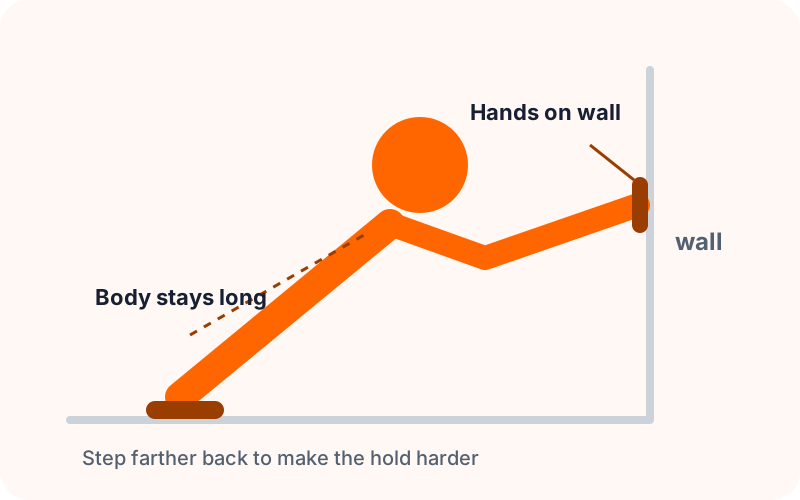
Set up a wall plank step by step
- Stand facing a clear wall, about one arm’s length away.
- Place your hands flat on the wall at roughly shoulder height and shoulder width.
- Walk your feet back a small distance while keeping your heels securely on the floor.
- Keep your head, shoulders, hips and legs in one long line.
- Gently tighten your stomach and buttocks without holding your breath.
- Press into the wall and hold for 15 seconds.
- Step towards the wall to finish.
The position should feel like a gentle challenge, not a test of how far you can lean.
What should it feel like?
You may feel work through your abdomen, shoulders and buttocks. You should still be able to breathe slowly and keep your body steady.
You should not feel sharp pain, pinching or numbness. Stop if you do. If an exercise repeatedly causes pain, ask a physiotherapist or qualified fitness professional to help you choose an appropriate variation.
Make it easier or harder
To make the wall plank easier, move your feet closer to the wall. Your body will become more upright and the wall will support more of your weight.
To make it harder, move your feet slightly farther back. Do not chase the steepest possible angle. Move only far enough that you can keep your position and breathing controlled.
When the wall version feels easy for several sessions, you could place your hands on a sturdy counter or bench. A lower surface makes the plank more demanding.
Common wall-plank mistakes
Bending only at the hips
The wall plank is not a standing forward bend. Move the body as one long line instead of leaving your hips behind while your shoulders travel forwards.
Letting the lower back sag
Step closer to the wall and shorten the hold. Gently tighten your buttocks and bring your ribs and pelvis a little closer together.
Placing the hands too high
Start with your hands around shoulder height. Reaching far overhead changes the position and may make the shoulders less comfortable.
Holding your breath
Use slow breaths as a form check. If you must hold your breath to continue, step towards the wall and rest.
A simple first session
Try:
- Hold for 15 seconds.
- Rest for 15 - 30 seconds.
- Repeat once or twice.
Finish each hold while the position still feels controlled. There is no need to reach maximum effort.
FAQ
What is a wall plank?
A wall plank is an upright plank with your hands or forearms supported against a wall. You step your feet back and keep your body in a long line, making it a gentler starting point than a floor plank.
How long should a beginner hold a wall plank?
Start with 15 seconds for two or three controlled holds. Choose a position where you can breathe normally and keep your body steady from beginning to end.
How do I make a wall plank harder?
Move your feet slightly farther from the wall while keeping them secure on the floor. Make one small change at a time and keep the same controlled body position.
Record a comfortable beginning
The Humble Plank can time and record the short hold. The goal is not to race towards the floor. It is to build a version you can perform comfortably and repeat.