“There’s a jug above the sloper.” That becomes useful information once you know which shapes to look for. Start with four common hold names: jug, sloper, pinch and crimp.
Four names, four clues
| Hold | What distinguishes it |
|---|---|
| Jug | A generous lip you can wrap your fingers behind. |
| Sloper | A rounded or sloping surface without a positive edge to catch. |
| Pinch | Opposing sides for your thumb and fingers. |
| Crimp | A small edge with room for your fingertips. |
The diagrams below simplify the shapes to highlight those clues. Real holds come in many sizes and forms.
Jug: room behind the lip
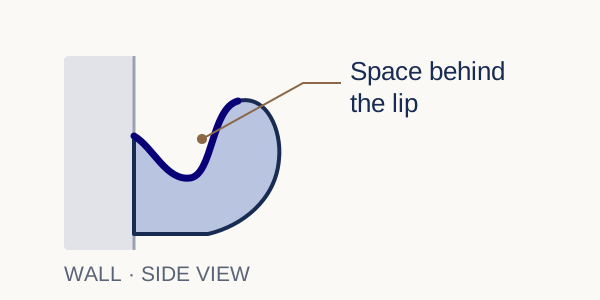
A jug gives your fingers something substantial to curl around. Look for that usable lip, rather than just a large blob of plastic. A big hold can be a sloper; a smaller hold can still feel juggy.
“The next one’s a jug” describes the hold. “That climb is juggy” means it has plenty of this kind of grip.
Sloper: a surface without a lip
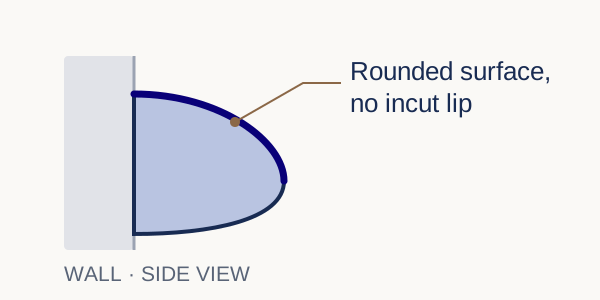
A sloper offers a rounded or sloping surface. There is no obvious edge to hook behind, so contact and friction matter. “Slopy” describes that quality: “The last hold is really slopy.”
The outside size can be misleading. A large sloper may offer less to catch than a much smaller jug.
Pinch: two opposing sides
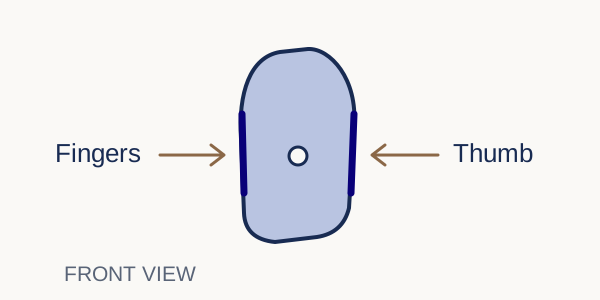
A pinch can be squeezed between thumb and fingers. It might be a narrow rib or a broad block. The word describes the opposing grip, not one particular outline.
You may hear it as a noun, “There’s a pinch on the right”, or a verb, “Can you pinch that hold?”
Crimp: a small edge
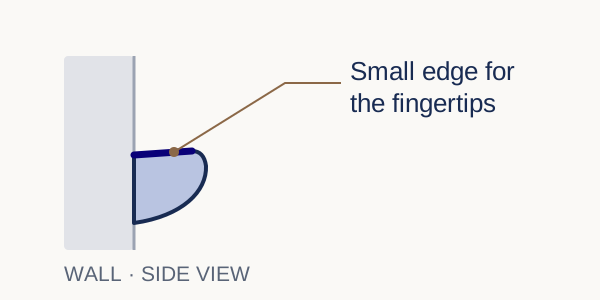
As a hold name, crimp usually means a small edge. Compare its shallow contact surface with the space behind a jug’s lip.
The same word also describes a way of gripping with bent fingers. Those are related meanings, but naming a hold “a crimp” does not prescribe one hand position. You may hear “a crimpy climb” for a climb with lots of small edges.
These names describe useful features, not fixed difficulty grades. The wall angle and the way a hold is turned affect how it feels.
Can you name the hold?
A broad, rounded hold has no lip to catch. Jug or sloper?
Sloper. Its size alone does not make it a jug.
Your thumb meets one side while your fingers meet the other. What is that grip called?
A pinch. Think of the two opposing sides.
“The finish is a jug after two crimps.” What change in holds would you expect?
Two small edges, followed by a hold with more room to curl your fingers behind its lip.
Keep the names for later
Our Indoor bouldering list contains these four hold names and six more terms for movements and climbing conversation. It is the same ten-entry list offered with the wordsearch. The saved entries are words and meanings; the diagrams above stay in this guide.
Your vocabulary
Indoor bouldering
Ten terms and meanings: these four holds, plus heel hook, toe hook, flag, dyno, mantle and beta. Add the list once to revisit the words over time. A free account is needed.
Open the indoor bouldering list
Word or name
crimp
Meaning or identifying fact
A small edge with room for the fingertips.
Word or name
sloper
Meaning or identifying fact
A rounded hold that relies on friction.
Word or name
jug
Meaning or identifying fact
A hold with a generous lip you can wrap your fingers behind.
Word or name
pinch
Meaning or identifying fact
A hold squeezed between fingers and thumb.
Word or name
heel hook
Meaning or identifying fact
Using your heel to pull or stabilise.
Word or name
toe hook
Meaning or identifying fact
Hooking the top of your toes behind a hold.
Word or name
flag
Meaning or identifying fact
Extending a leg to balance your body.
Word or name
dyno
Meaning or identifying fact
A dynamic leap between holds.
Word or name
mantle
Meaning or identifying fact
Pressing down to move your body above a hold.
Word or name
beta
Meaning or identifying fact
Information about how to climb a problem.
Keep exploring
Find the names in the indoor bouldering wordsearch. For what people say about their attempts, read flash, send and project.
References: REI’s climbing hold guide explains the hold and grip names. Rockcity’s guide to hold shapes describes the features across sizes, and Metolius’s mini jugs give an example of smaller jug holds.