The Norwegian word was sannsynlig, meaning “likely”. In the article, the useful expression was Det er lite sannsynlig, meaning “It is unlikely”. Keeping just the word would leave out the part that changed the sense.
The recorded Learnalist Reader session starts with a kode24 article and ends with a word note and a sentence note saved to the library.
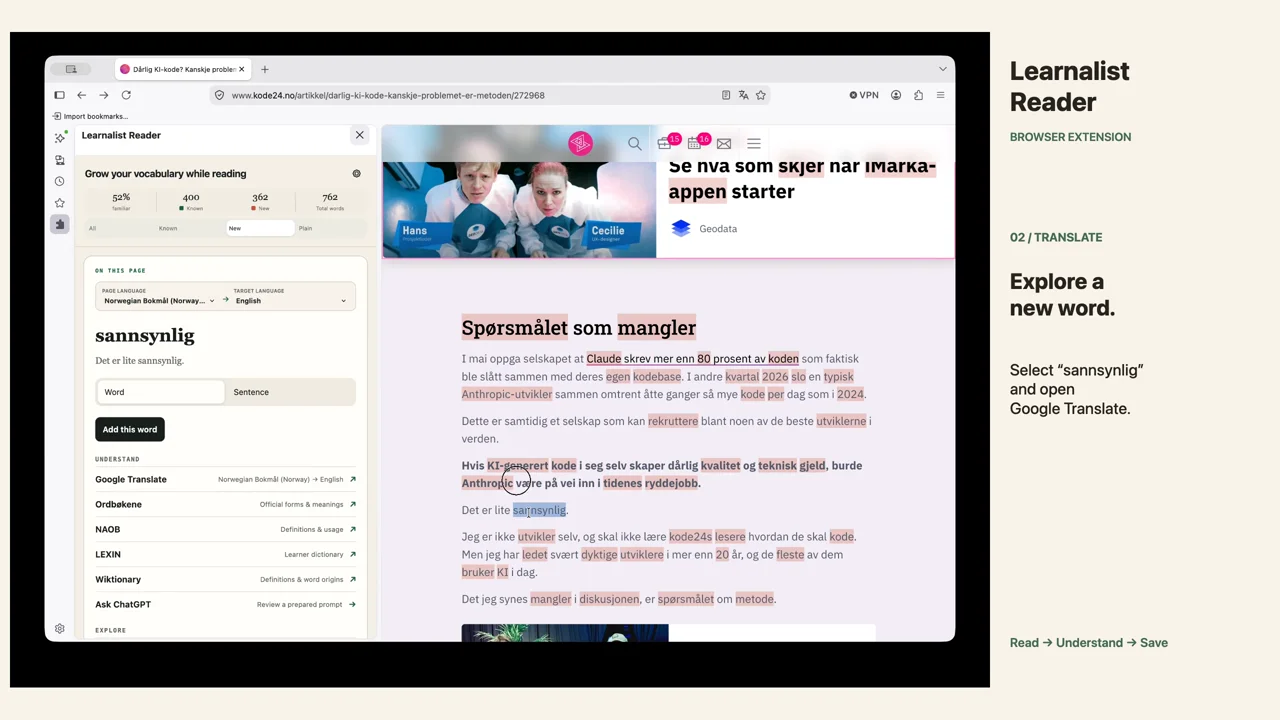
What happened in the session
The selected word stays beside its original sentence. The workflow checks the word, then the whole sentence. At 00:16, a prepared prompt is opened in ChatGPT for an explanation. That is an optional investigation step, not an automatic translation or a required part of saving.
At 00:35, the session chooses Add sentence, then Both. The word meaning and sentence meaning are filled in separately. The save confirmation shows two notes.
At 00:50, Reader marks the saved material as known. In this interface, that means it is in the library. It does not show that the learner has memorised it.
Why keep two notes?
One prompt tests recognition of the word. The other keeps the expression that appeared in the reading. They ask different questions, even though they started from the same selection.
sannsynlig
Show answer
likely
Det er lite sannsynlig.
Show answer
It is unlikely.
Try it with your next unfamiliar word
Save the word for its meaning and the sentence for how it was used. Here, that gives you two things to practise: recognising sannsynlig and understanding how lite sannsynlig changes the meaning.
Follow the word-to-note walkthrough with something you are reading. When your notes return for spaced repetition, try recalling each meaning before flipping the card.