A full forearm plank supports your body on your forearms and toes. It asks you to hold a long position from head to heels while breathing and resisting sagging or folding at the hips.
You do not need to begin here. Wall, raised and knee planks are valid starting points.
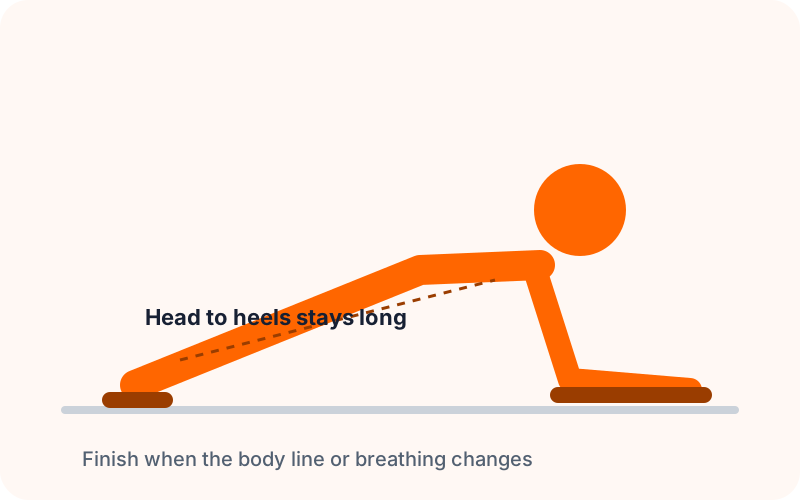
Set up a forearm plank step by step
- Lie on your front on a comfortable surface.
- Place your elbows beneath your shoulders and forearms on the floor.
- Tuck your toes under and lift your knees and hips.
- Keep your head, shoulders, hips and heels in a long line.
- Gently tighten your stomach, buttocks and thighs.
- Press the floor away through your forearms.
- Breathe slowly and hold for 15 seconds.
- Lower your knees to finish.
What should it feel like?
Expect effort through your abdomen, sides, shoulders, buttocks and thighs. The work may build quickly, but you should still be able to breathe.
Stop for sharp pain, pinching or numbness. If a floor plank repeatedly causes discomfort, return to an easier variation or ask a qualified professional for guidance.
Make it easier or harder
Lower your knees or use a raised surface to make the exercise easier. To make it harder, first add a few seconds while preserving the same position. You do not need unstable equipment or a very long hold.
Common forearm-plank mistakes
Letting the hips sag
End the hold or lower your knees. A shorter controlled plank is preferable to continuing through the lower back.
Lifting the hips
If the hips keep moving upwards, you may be trying to hold for too long. Rest or choose the knee version.
Sinking between the shoulders
Press the floor away and keep the upper back broad rather than collapsing towards the mat.
Looking forwards
Look down so your neck follows the line of your back.
A simple first session
Hold for 15 seconds, rest for 15 - 30 seconds, then repeat once or twice. Stop each repetition when the body line or breathing changes.
FAQ
How do I do a forearm plank correctly?
Place your elbows beneath your shoulders, lift onto your forearms and toes, keep a long line from head to heels, gently tighten your stomach and buttocks, and continue breathing.
When should I stop a forearm plank?
Stop when your hips sag or lift, your shoulders collapse, or you need to hold your breath. The end of controlled form is the end of the useful hold.