A knee plank is a floor plank supported by your forearms and knees. It shortens the lever created by your body, making it easier to practise breathing and control before moving onto your toes.
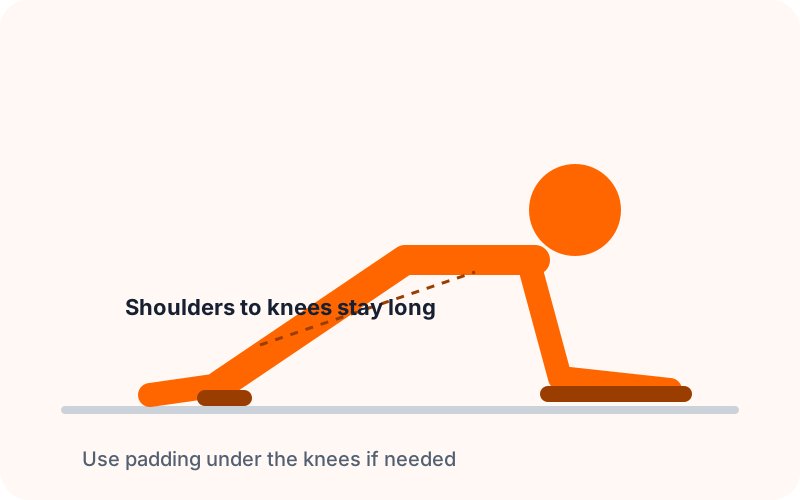
Set up a knee plank step by step
- Lie on your front on a mat or folded towel.
- Place your elbows beneath your shoulders with forearms on the floor.
- Keep your knees supported and lift your hips away from the floor.
- Create a long line from your head through your shoulders and hips to your knees.
- Gently tighten your stomach and buttocks.
- Press the floor away through your forearms and breathe slowly.
- Hold for 15 seconds, then lower with control.
What should it feel like?
You may feel work through your abdomen, sides, shoulders and buttocks. Your knees are support points; the exercise should not feel like kneeling on a painful surface.
Stop for sharp pain, pinching or numbness. Add padding or choose a raised plank if knee pressure is uncomfortable.
Make it easier or harder
Shorten the hold or return to a raised plank to make it easier. To make it harder, keep the same duration and lift onto your toes for only the final few seconds, or try a full forearm plank in a separate session.
Do not progress merely because the knee version has been labelled “modified.” Progress when it feels controlled.
Common knee-plank mistakes
Bending at the hips
Avoid sitting your hips back towards your heels. Move the hips forwards until the shoulders, hips and knees form a long line.
Sagging through the lower back
Shorten the hold. Gently tighten your buttocks and bring your ribs and pelvis a little closer together.
Placing elbows too far forwards
Begin with the elbows beneath the shoulders so the upper body has a stable base.
Holding your breath
If you cannot breathe slowly, lower to the mat and rest.
A simple first session
Hold for 15 seconds, rest for 15 - 30 seconds, then repeat once or twice. A stable short hold is more useful than struggling towards a longer time.
FAQ
Is a knee plank a proper plank?
Yes. A knee plank uses the knees as the lower support point while you practise trunk control, breathing and shoulder position. It is a useful exercise rather than a failed full plank.
Where should my knees be in a knee plank?
Keep your knees on a comfortable padded surface and aim for a long line from your head through your shoulders and hips to your knees.